Leave Your Message
The global demand for architectural surface finishes is expanding, but product choices remain surprisingly inconsistent. Allied Market Research valued the global wall panels market at approximately USD 14.3 billion in 2021 and projected continued growth through 2031. Its research includes several panel categories, not only decorative products. That limitation matters.
This guide examines 10 3d Decorative Wall Panels for international buyers. It considers more than surface appearance. Each selection is assessed through material composition, dimensional stability, moisture resistance, acoustic potential, installation method, and export practicality. A panel that looks impressive under showroom lighting may perform poorly in a humid hotel corridor. Small details matter. Edge quality, carton protection, batch consistency, and replacement availability can affect the entire project.
Professional buyers should also review manufacturer test documentation. Relevant evidence may include reaction-to-fire testing, formaldehyde or VOC reports, acoustic results, and moisture performance. ASTM and ISO methods can support comparison, but certificates must match the exact product, thickness, and production batch. Markets also apply different building and labeling requirements. Always verify local rules before ordering.
No ranking is completely neutral. Design trends change, freight costs fluctuate, and a suitable panel for a restaurant may be unsuitable for a residential bedroom. Some international suppliers provide excellent samples but weaker after-sales support. That risk is easy to overlook. Therefore, this overview combines visual appeal with documented performance, supplier experience, and purchasing realities. The final choice should still follow a physical sample review, technical confirmation, and a carefully negotiated quotation.
What Are 3D Decorative Wall Panels?
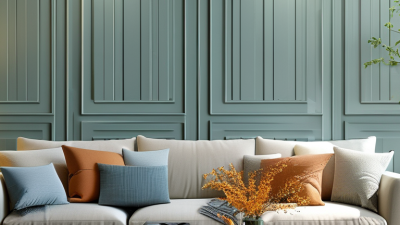
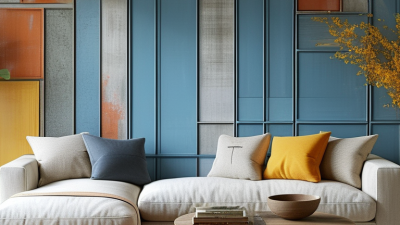
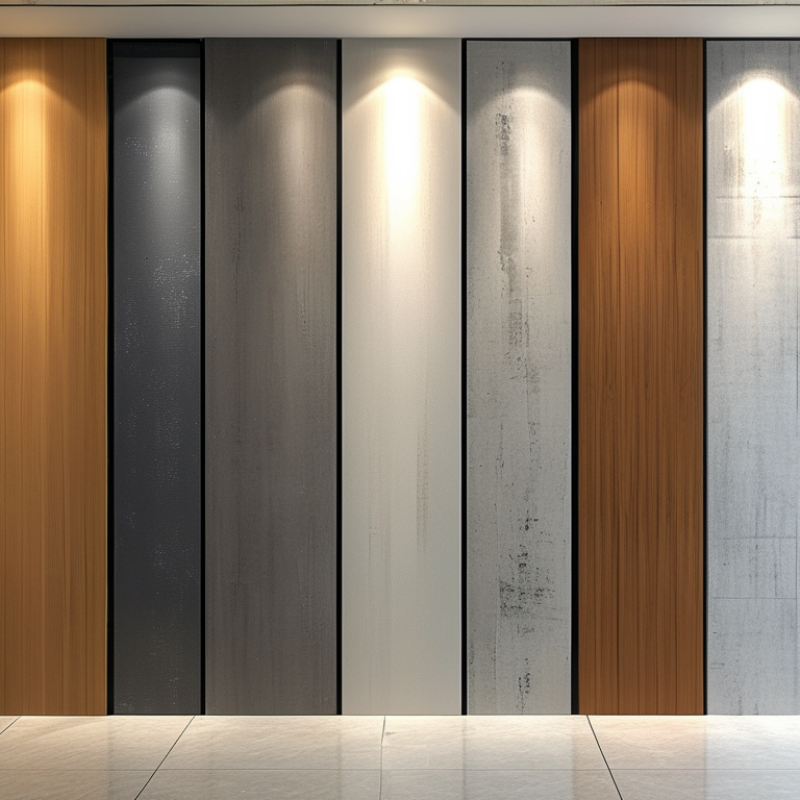
3D decorative wall panels are modular surfaces with raised, recessed, or carved patterns. They add shadow, texture, and depth without rebuilding a wall. Common materials include gypsum, PVC, MDF, bamboo fiber, mineral composite, and recycled polymers. Their performance differs greatly. A lightweight panel may install quickly, but it can dent during international transport. A dense panel may feel stronger, yet increase freight costs and wall-load requirements.
The 2024 UNEP Global Status Report for Buildings and Construction states that buildings consume 32% of global energy and produce 34% of global carbon dioxide emissions. This makes material choice important, not merely visual. Buyers should request recycled-content details, product weight, moisture resistance, and disposal guidance. The U.S. Environmental Protection Agency also reports that indoor pollutant levels can be two to five times higher than outdoor levels. Low-emission adhesives and verified material testing therefore deserve attention. A beautiful sample can mislead.
Tips: Ask for technical data sheets, fire-test classifications, acoustic results, and installation instructions. Check whether the testing standard matches your destination market. Confirm carton dimensions before ordering samples. Corrugated textures collect dust more easily than smooth ones. That small detail is often overlooked. Panels are not automatically sustainable, either. Some contain mixed layers that are difficult to recycle. A careful buyer should compare service life, maintenance, and shipping impact, not only the first quotation.
A practical comparison of common three-dimensional wall-panel categories, typical specifications, installation methods, and international purchasing considerations.
| Rank | Panel Category | Typical Material | Common Panel Size | Typical Relief Depth | Weight Profile | Best Applications | Moisture Suitability | Typical Installation | Important Buyer Checks |
|---|---|---|---|---|---|---|---|---|---|
| 1 | Textured PVC Panels Lightweight | Rigid or semi-rigid polyvinyl chloride with a molded surface | Approximately 2,600–2,900 × 250–400 mm; smaller decorative tiles are also common | Approximately 3–15 mm | Low; generally easier to handle than mineral or wood-based panels | Feature walls, retail interiors, hospitality areas, ceilings, and quick renovation projects | Good for humid rooms when the product is sealed and installed according to its instructions; avoid assuming it is suitable for continuous water exposure | Construction adhesive, panel adhesive, or mechanical fixing over a clean, sound substrate | Check thickness, odor, surface stability, UV resistance, recycling information, and local fire-performance requirements |
| 2 | Polyurethane 3D Panels High detail | Rigid polyurethane foam with a molded decorative coating | Commonly about 500 × 500 mm, 600 × 600 mm, or 1,200 × 600 mm | Approximately 10–50 mm | Low; deep patterns can create a strong visual effect without a heavy structural load | Residential feature walls, restaurants, showrooms, studios, and curved or highly detailed designs | Usually suitable for dry interior areas; moisture and outdoor use depend on the coating and manufacturer testing | Adhesive installation, followed by joint filling, sanding, and paint finishing when required | Request density, coating type, dimensional tolerance, flame-spread documentation, and paint compatibility |
| 3 | MDF 3D Wall Panels Paintable | Medium-density fiberboard with routed, pressed, or molded relief | Frequently 2,400–2,800 × 600 mm; tile formats are also available | Approximately 3–25 mm | Medium; denser and heavier than foam or thin plastic panels | Living rooms, offices, bedrooms, reception areas, and painted interior feature walls | Limited in wet conditions unless moisture-resistant board, edge sealing, and suitable finishing are used | Adhesive, brad nails, screws, or battens depending on panel thickness and wall condition | Confirm formaldehyde-emission class, moisture resistance, panel flatness, edge protection, and paint finish requirements |
| 4 | Gypsum 3D Panels Mineral-based | Cast gypsum or gypsum-fiber composite | Commonly 600 × 600 mm; larger formats may be available for specific designs | Approximately 10–40 mm | Medium to high; heavier and more brittle than polymer-based alternatives | Premium interior feature walls, galleries, offices, corridors, and decorative ceilings | Best for dry interiors; moisture-resistant formulations are needed for humid applications | Gypsum-compatible adhesive, screws, or a prepared framing system; joints usually require finishing | Check moisture classification, impact resistance, edge breakage risk, packaging strength, and applicable fire documentation |
| 5 | WPC Decorative Panels Wood-look finish | Wood-plastic composite containing wood fiber or flour and a polymer binder | Often 2,800–3,000 × 150–300 mm for slatted or fluted profiles | Approximately 10–35 mm | Medium; profile shape and internal structure significantly affect weight | Interior slat walls, hospitality spaces, offices, media walls, and modern residential interiors | Generally more humidity-tolerant than untreated wood, but not automatically waterproof or suitable for submerged areas | Clips, screws, adhesive, or installation over battens and a level supporting surface | Ask for water absorption, expansion rate, UV stability, surface wear resistance, and fire-performance test results |
| 6 | Bamboo-Fiber Panels Light to medium weight | Compressed bamboo fiber or plant-fiber composite with a decorative surface layer | Commonly about 2,800–3,000 × 600 mm; tile formats are also used | Approximately 5–20 mm | Low to medium, depending on density and backing construction | Interior feature walls, offices, bedrooms, retail spaces, and large-area decorative renovations | Usually intended for dry interiors; edges and joints require protection in humid environments | Adhesive or mechanical fixing on a dry, flat substrate; cutting tools should be selected for the panel density | Verify fiber composition, formaldehyde emissions, moisture behavior, odor, surface coating, and batch color consistency |
| 7 | PET Acoustic Panels Sound absorption | Thermally bonded polyester fiber, often manufactured partly from recycled PET content | Commonly 2,400 × 1,200 mm, 2,440 × 1,220 mm, or modular tile sizes | Approximately 6–30 mm, with grooved or folded profiles increasing visual depth | Low; relatively easy to cut and handle | Meeting rooms, home offices, studios, classrooms, restaurants, and media areas | Normally for dry indoor use; polyester fiber panels are not a substitute for waterproof wall finishes | Adhesive, clips, screws, or suspended acoustic systems | Request sound absorption data such as NRC or equivalent test results, fiber density, colorfastness, cleanability, and fire classification |
| 8 | Natural Stone Veneer Panels Premium appearance | Thin natural stone bonded to a backing or engineered stone-based decorative surface | Often about 600 × 300 mm, 600 × 600 mm, or larger custom formats | Approximately 5–30 mm, depending on the split-face or textured finish | Medium to high; the substrate and stone thickness determine handling requirements | Luxury interiors, fireplaces, reception areas, exterior accents, and hospitality projects | Many stone surfaces tolerate humidity, but the backing, adhesive, grout, and sealer must also be suitable for the exposure | Compatible tile or stone adhesive, mechanical support where required, and appropriate joint treatment | Check stone origin documentation, thickness tolerance, color variation, pallet weight, breakage allowance, and installation substrate requirements |
| 9 | Fiber-Cement 3D Panels Durable surface | Cementitious board reinforced with cellulose or mineral fibers | Commonly 2,400–3,000 × 600–1,200 mm, depending on the product system | Approximately 5–25 mm | High compared with polymer and fiber panels | Commercial interiors, sheltered exteriors, façades, corridors, and high-traffic areas when approved for the intended use | Often suitable for humid or exterior environments when the exact product, coating, joints, and substructure are approved for that exposure | Screws, rails, subframes, or approved adhesive systems; cutting may require dust-control measures | Confirm water absorption, freeze-thaw performance, panel weight, cutting requirements, corrosion-resistant fixings, and local code compliance |
| 10 | Solid Wood or Slatted Timber Panels Natural material | Solid timber, veneered board, or timber slats mounted on a backing or acoustic substrate | Slat modules commonly range from 2,400–3,000 mm in length and 300–600 mm in width | Approximately 10–40 mm, excluding deeper batten systems | Medium; varies with timber species, slat size, and backing material | Residential interiors, hotels, offices, restaurants, ceilings, and biophilic design projects | Best for controlled indoor humidity unless the wood species, finish, ventilation, and detailing are designed for other conditions | Clips, screws, battens, or adhesive depending on the backing and wall structure | Check timber species, moisture content, sustainable sourcing documents, fire treatment, finish durability, and allowable color variation |