request to quote
Leave Your Message

What Are the 2026 Top Ceiling Wall Panel Types?

Ceiling Wall Panels are no longer chosen for appearance alone. In 2026, designers and building owners must weigh acoustics, moisture resistance, maintenance, fire performance, and installation conditions. A panel that looks convincing in a showroom may behave differently above a busy classroom or beneath a humid bathroom ceiling. Details matter.

The U.S. Energy Information Administration’s 2018 Commercial Buildings Energy Consumption Survey counted about 5.9 million commercial buildings, covering roughly 97 billion square feet. That scale makes interior material choices consequential, though the survey does not rank ceiling-panel products. For market context, manufacturers and project teams should also review current acoustic, building-material, and sustainability reports, checking publication dates and methods before relying on headline figures.

This guide compares common options: mineral-fiber tiles, gypsum panels, metal systems, wood panels, PVC panels, and acoustic felt. Each has trade-offs. Mineral fiber can help manage sound, while metal offers a durable, clean-lined finish; wood adds warmth but may need careful moisture control. There is no universal winner. Project specifications, local conditions, and verified product documentation should guide the final choice. And sometimes, the honest answer is that a popular panel is simply the wrong fit.
What Are the 2026 Top Ceiling Wall Panel Types?

How Ceiling and Wall Panels Are Classified in 2026

In 2026, ceiling and wall panels are best classified by material, construction, and intended use. Material affects weight, moisture tolerance, sound, and maintenance. Common options include gypsum, mineral fiber, metal, wood, PVC, and fiber cement. Each has different limits. A wood panel may add warmth to a dry living room, while a mineral-fiber tile can help absorb sound in an office.

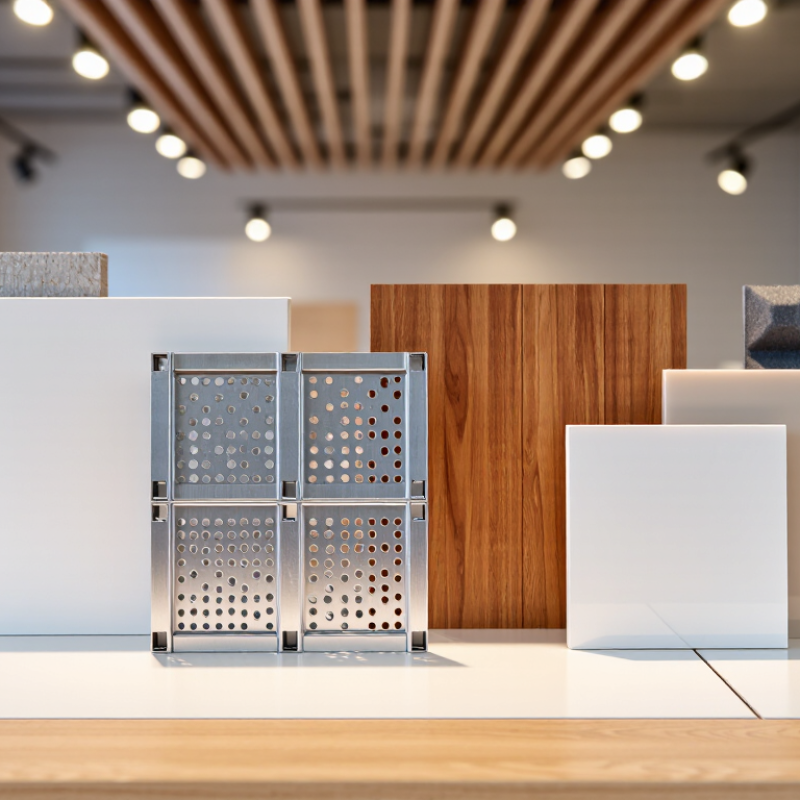
Construction offers another useful distinction. Panels may be solid, perforated, textured, slatted, or made as modular tiles. Perforations can support acoustic performance when paired with suitable backing, but appearance alone cannot confirm sound control. Check product data and installation details. Small gaps matter.

Location helps narrow the choice. Ceiling panels often need to be lightweight and securely fixed overhead. Wall panels may prioritize impact resistance, cleanability, or visual texture. Wet areas call for materials and finishes rated for moisture; ordinary decorative panels may swell or stain near persistent splashes. Fire performance and indoor-air information should also be reviewed for the specific product, rather than assumed from its material category.

These categories overlap. A metal panel can be both decorative and acoustic, while a PVC panel may suit a wall or ceiling depending on its support system. That makes labels imperfect. Compare the panel’s tested properties, substrate, fixing method, and room conditions before choosing. A sample under the actual room lighting can reveal color shifts that a catalog misses.

What Materials Define the Leading Panel Types

What Are the 2026 Top Ceiling Wall Panel Types?

What Materials Define the Leading Panel Types

Material choice shapes a panel’s weight, sound control, moisture tolerance, and finish. Gypsum remains a common option for smooth, paintable ceilings and wall surfaces. The U.S. Geological Survey’s 2024 Mineral Commodity Summaries estimated domestic gypsum mine production at about 22 million metric tons in 2023. That scale reflects gypsum’s broad role in building products, though it does not mean every project needs it. Mineral-fiber panels are often chosen for suspended ceilings where sound absorption and easy access to services matter. Their soft, fissured faces can help reduce reverberation in offices and classrooms.

Metal panels suit areas needing a durable, wipeable surface, while wood and wood-based panels bring visible grain and warmth. PVC panels are light and resist moisture, but check fire ratings and local project requirements before specifying them. No material wins everywhere. A humid bathroom, busy corridor, and quiet meeting room have different demands.

Tips: Compare panel weight, edge details, cleaning needs, and acoustic data before ordering. Ask for test documentation, not just a sample. A small sample can reveal color and texture, but it cannot prove long-term performance. Check the ceiling structure and service access, too; these details are easy to overlook.

What Are the 2026 Top Ceiling Wall Panel Types? - What Materials Define the Leading Panel Types

Panel type Typical material Common applications Practical strengths Points to consider
Gypsum board panels Gypsum core faced with paper or a glass-fiber mat Interior ceilings and walls in homes, offices, and commercial buildings Smooth finish; widely available; can be cut and finished on site. Some products are formulated for moisture or fire resistance. Standard board is not intended for persistent wet conditions. Select the product and assembly to suit the location and applicable code.
Mineral-fiber acoustic panels Mineral wool or other mineral fibers, commonly with binders and a finished face Suspended ceilings in offices, classrooms, healthcare spaces, and retail interiors Available in sound-absorbing designs; individual tiles can often be lifted for access to services above the ceiling. Performance varies by product and installation. Tiles may be vulnerable to impact or moisture unless specifically rated for the conditions.
Metal panels Typically aluminum or steel, sometimes with a factory-applied finish or perforations Commercial ceilings, corridors, transit facilities, and selected exterior soffits Durable surface; recyclable metal content; perforated versions can be paired with acoustic backing. Acoustic results depend on perforation, backing, and system design. Check corrosion resistance and finish suitability for the environment.
Wood and wood-based panels Solid timber, plywood, veneer-faced panels, or engineered wood products Feature ceilings and walls in residential, hospitality, and commercial interiors Natural grain and a range of finishes; slatted or perforated designs can contribute to room acoustics when properly detailed. Wood can respond to changes in humidity. Confirm fire, emissions, and moisture requirements for the specific product and application.
PVC and other plastic panels Polyvinyl chloride (PVC) or other polymer formulations Utility areas and selected interiors where wipeable surfaces are useful Lightweight; many designs are easy to clean and resist routine moisture exposure. Not all products have the same fire, heat, or environmental performance. Verify product documentation and local code requirements.
Fiber-cement panels Cement, cellulose fibers, and mineral additives; formulations vary Exterior soffits and other applications specified for exposure to weather or damp conditions Suitable products can provide a durable, dimensionally stable surface for exterior use. Panels are generally heavier than many interior options. Follow the manufacturer’s fastening, joint, cutting, and safety instructions.
Glass-mat gypsum panels Gypsum core with glass-fiber mat facings Interior or exterior locations where the specified panel is approved, including some damp or high-humidity assemblies A glass-mat facing can be appropriate where paper-faced board is not preferred; some products are designed for exterior sheathing or tile substrates. Product ratings and approved uses differ. The panel alone does not replace a complete waterproofing or weather-resistive system.
Acoustic wood-wool panels Wood fibers bound with cement or another specified binder Ceilings and walls in spaces where sound absorption and a textured finish are desired Open fiber texture can absorb sound as part of a designed acoustic assembly; panels can provide a robust, visually distinctive surface. Acoustic and fire performance depend on panel thickness, backing, and installation. Confirm suitability for the intended exposure and support system.

Selection note: “Top” panel types depend on the project. Compare tested fire and acoustic ratings, moisture suitability, installation requirements, maintenance needs, and applicable building codes for the complete ceiling or wall assembly.

Which Panel Designs Suit Different Interior Styles

Which Panel Designs Suit Different Interior Styles

Choosing ceiling and wall panels works best when the room’s character leads the decision. For modern interiors, smooth PVC or painted MDF panels create clean lines and an uncluttered look. Pair them with recessed lighting, but check access needs before covering service points. Small details matter.

Warm, natural interiors often suit wood-look panels or real timber slats. Their grain adds texture above a dining table or behind a bed. In compact rooms, lighter finishes can help the space feel open; dark boards may feel heavy, though lighting and ceiling height change the effect. Rustic rooms can use rougher textures, while classic interiors may benefit from restrained, decorative moulded panels.

For industrial spaces, metal-look panels or simple fibre-cement boards can complement exposed brick and black fixtures. Bathrooms and kitchens need materials rated for moisture, with suitable installation and ventilation; appearance alone is not enough.

A useful test is to view a sample in the room’s actual daylight and evening lighting. Colours shift. Panel seams can also look more prominent than expected, so mock up a small section before committing.

How Panel Types Compare in Durability and Maintenance

What Are the 2026 Top Ceiling Wall Panel Types?
How Panel Types Compare in Durability and Maintenance

Mineral-fiber panels are common in suspended ceilings, where individual tiles can be lifted for access and replaced when stained. They are practical, but their porous faces may hold dust and show water marks. Gypsum panels create a smooth, painted surface and resist everyday scuffs, though repairs can leave visible patches. PVC panels tolerate damp rooms and wipe clean easily; check edges and joints, where grime can collect. Metal panels resist impact and can be cleaned, but scratches may stand out under bright lighting. Wood adds warmth, yet humidity changes can cause movement. No panel is maintenance-free.

Moisture is the detail people often underestimate. The U.S. Environmental Protection Agency’s mold guidance advises drying wet materials within 24–48 hours to reduce mold risk. That window is a useful maintenance target, not a guarantee: hidden leaks can keep backing materials damp. For durability comparisons, check published test results for impact, moisture, and cleanability rather than relying on surface appearance alone. ASTM methods can help define comparable performance, but installation quality and room conditions still matter.

Tips: In kitchens, bathrooms, or laundry rooms, inspect seams and corners after leaks or heavy condensation. Wipe washable surfaces with a soft cloth and mild cleaner, then dry them. Don’t scrub mineral-fiber tiles; replace damaged ones, and investigate the moisture source first. A small stain may be only cosmetic. Or it may not be.

2026 Ceiling and Wall Panel Types: Durability and Maintenance

Scores are qualitative comparisons on a 1–5 scale, where 5 indicates greater durability or easier routine maintenance. Actual performance varies with product specifications, installation, and exposure to moisture or impact; these are not standardized test ratings.

What Factors Guide the Choice of Ceiling and Wall Panels

What Are the 2026 Top Ceiling Wall Panel Types?

What Factors Guide the Choice of Ceiling and Wall Panels?

Selecting ceiling and wall panels in 2026 requires more than comparing colors and surface textures. The room’s moisture, temperature, noise, and traffic levels should guide the decision. Mineral fiber panels suit offices needing sound control and easy replacement. Gypsum panels provide a smooth, painted finish for residential and commercial interiors. Metal panels work well in busy areas because they resist impact and clean quickly.

Moisture changes the specification. Bathrooms, kitchens, and indoor pools need panels with low water absorption and protected edges. A decorative wood-look panel may create warmth, but it can perform poorly in damp conditions without proper treatment. I have seen attractive finishes fail because installers ignored ventilation and joint protection. Small details matter.

Fire performance should be checked against local building requirements. Ask for tested ratings, installation limits, and documentation rather than relying on general claims. Acoustic goals also need measurement. A classroom may require sound absorption, while a corridor may prioritize durability and cleaning. Maintenance access matters too. Removable panels can reduce future repair time, even if their initial cost is higher. Sustainability deserves careful review. Recycled content sounds positive, but transport, replacement frequency, and end-of-life options also affect the panel’s real impact. Budget pressure often encourages shortcuts. That choice can become expensive later.