request to quote
Leave Your Message

10 Best 3D Ceiling Panels for Modern Interiors

Modern interiors are moving beyond flat, unnoticed ceilings. Sculptural surfaces now add depth, rhythm, and controlled visual drama without changing the entire room. This guide explores 10 Best 3d Ceiling Panels for Modern Interiors, with attention to appearance, installation, durability, and everyday maintenance.

Our recommendations reflect practical design considerations used by interior professionals and experienced installers. We compare panel materials, relief patterns, acoustic potential, moisture resistance, and compatibility with lighting. A dramatic geometric panel may look impressive in a showroom, yet appear overwhelming in a compact bedroom. A subtle linear design can perform better above a dining table or narrow hallway. Scale matters.

Texture changes everything.

The selected 3d Ceiling Panels suit different needs, from warm wood-inspired finishes to crisp gypsum, PVC, and fiber-based options. We consider manufacturer specifications carefully, but specifications do not replace site judgment. Ceiling height, substrate condition, humidity, fire-rating requirements, and access for repairs can change the best choice. Some panels may require professional installation, especially around recessed lights, ventilation, or uneven surfaces.

There is no universally perfect ceiling panel. That is worth remembering. A beautiful finish can reveal dust more easily, while a lightweight option may offer less visual richness. We also question marketing claims when independent performance information is limited. Use this overview as a reliable starting point, then confirm local building requirements and installation instructions before purchasing. A refined ceiling should look striking, remain practical, and support the way people actually use the room.
10 Best 3D Ceiling Panels for Modern Interiors

What 3D Ceiling Panels Are and How They Transform Modern Interiors

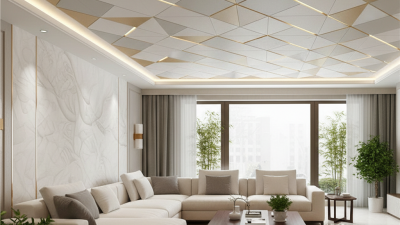
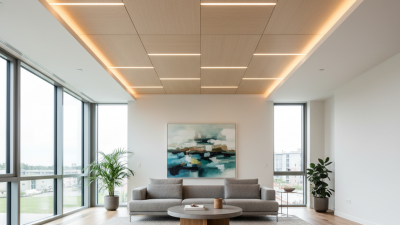
3D ceiling panels are molded, slatted, or sculpted surfaces that add measurable depth above the room. Unlike flat paint, they create ridges, waves, geometric relief, and changing shadow lines. Daylight makes the pattern move. Concealed lighting makes it sharper.

Their transformation is visual, but not purely decorative. A carefully spaced profile can scatter sound and reduce harsh reflections, especially in restaurants, studios, and open offices. The World Health Organization’s Environmental Noise Guidelines recommend bedroom noise below 30 dB(A) at night. Ceiling relief cannot guarantee that target, yet it may support better acoustic planning when paired with insulation and absorption layers. Panel density, cavity depth, and installation gaps matter more than dramatic appearance.

Material selection also deserves scrutiny. UNEP’s 2024 Global Status Report for Buildings and Construction states that buildings consume 32% of global energy and generate 34% of global carbon dioxide emissions. Lightweight panels with recycled content, low-emission finishes, and documented environmental declarations can reduce some impact. They do not automatically make a room sustainable. That assumption is too convenient. Fire ratings, maintenance access, moisture resistance, and cleaning requirements should be verified through technical documents. In practice, a softly ribbed ceiling may feel calmer than a deep sculptural grid, even when both look impressive in photographs. The best result is sometimes less dramatic.
Key Factors for Comparing the Ten Best 3D Ceiling Panel Options

Choosing among the ten best 3D ceiling panels requires more than comparing patterns. Material performance matters. The International Energy Agency reported that buildings consumed about 30% of global final energy in 2022. Therefore, panel weight, insulation, lighting integration, and maintenance can influence long-term performance. A lightweight mineral-fiber panel may simplify installation, while a molded polymer panel can resist humidity more effectively.

Acoustic control deserves careful testing. Look for Noise Reduction Coefficient values measured under ASTM C423, not vague claims such as “sound absorbing.” The U.S. General Services Administration recommends evaluating reverberation in occupied spaces, especially offices, classrooms, and restaurants. Fire behavior also requires documented testing, such as ASTM E84 results. Ask for the full report. Marketing language is not evidence.

Installation details often decide the real cost. Compare panel dimensions, cutting waste, suspension compatibility, access for wiring, and replacement availability. Life-cycle data can reveal hidden impacts. Environmental Product Declarations provide comparable information about manufacturing and emissions. My first comparison focused too heavily on visual depth. That was a mistake. Deep geometry can collect dust and complicate cleaning. Moisture resistance, stain repair, and lead times deserve equal attention. Check the warranty terms carefully. A beautiful ceiling can still perform poorly when maintenance access is limited. Geological? No, practical details win.

10 Best 3D Ceiling Panels for Modern Interiors - Key Factors for Comparing the Ten Best 3D Ceiling Panel Options

Comparison of commonly used 3D ceiling panel constructions and their typical performance characteristics
Option Panel Type Common Material Typical Panel Size Approx. Thickness Approx. Weight Moisture Resistance Acoustic Performance Fire Considerations Installation Method Best Use Maintenance Relative Cost
1 Gypsum Relief Panel Reinforced gypsum Approx. 600 × 600 mm 18–30 mm Approx. 8–14 kg/m² Moderate; use moisture-resistant grades in humid rooms Low to moderate; mainly provides visual diffusion Generally non-combustible, subject to the tested assembly Adhesive, screws, or concealed framing Living rooms, lobbies, galleries, and formal interiors Paintable; clean with a soft, dry or lightly damp cloth Medium
2 Mineral Fiber 3D Tile Mineral fiber with painted or textured face Approx. 600 × 600 mm 15–25 mm Approx. 2.5–5 kg/m² Limited to moderate, depending on the tile grade Good; porous construction can reduce reflected sound Many products are available with tested fire classifications Suspended T-grid ceiling system Offices, classrooms, studios, and open-plan spaces Replace damaged tiles; vacuum or dust gently Medium
3 Acoustic PET Felt Baffle Recycled polyethylene terephthalate fiber Typical baffles: 300–600 mm wide × 1200–2400 mm long 9–24 mm Approx. 1.5–4 kg/m² Good resistance to occasional humidity; not intended for saturation Very good when used as spaced baffles or clouds Fire rating varies; select a tested acoustic-felt product Suspended cables, clips, or ceiling tracks Restaurants, offices, reception areas, and creative workspaces Vacuum with a soft brush or spot-clean according to the material guide Medium–High
4 Expanded PVC 3D Panel Expanded polyvinyl chloride Approx. 500 × 500 mm or 600 × 600 mm 6–12 mm Approx. 2–4 kg/m² High; non-porous surface handles routine humidity well Low; hard surfaces can reflect sound Must be selected by tested flame-spread and smoke requirements Construction adhesive, screws, or a lightweight grid Retail areas, corridors, feature ceilings, and dry commercial spaces Wipe with a mild, non-abrasive cleaner Low–Medium
5 Aluminum Linear Baffle Powder-coated or anodized aluminum Typical baffles: 25–100 mm wide × up to 6000 mm long 0.7–1.2 mm metal skin Approx. 3–8 kg/m² Excellent; suitable for many humid interior applications Moderate to good when combined with acoustic backing Metal is non-combustible; coating and backing require separate review Carrier rails, clips, or suspended support profiles Transport hubs, offices, hospitality spaces, and contemporary interiors Low; wipe or gently wash the coated surface High
6 Wood Slat Acoustic Ceiling Timber veneer or solid wood slats with acoustic backing Typical slats: 30–60 mm wide × 2400–3000 mm long 35–50 mm overall system depth Approx. 8–15 kg/m² Moderate; avoid prolonged moisture and condensation Good to very good with mineral wool or acoustic fleece backing Finish and backing must meet the project fire specification Clips, battens, or concealed suspension rails Hospitality, residential, executive, and biophilic interiors Dust regularly; refinish or repair according to the wood finish High
7 3D Molded Plywood Panel Molded plywood or laminated wood veneer Approx. 600 × 600 mm to 1200 × 600 mm 6–15 mm Approx. 4–9 kg/m² Moderate after sealing; not ideal for persistently damp areas Low to moderate unless perforated or backed with acoustic material Requires a tested finish and assembly for code compliance Clips, screws, or concealed framing Feature ceilings, restaurants, lounges, and residential interiors Dry dusting and occasional gentle cleaning; protect the finish High
8 Fiber-Reinforced Cement Panel Fiber-cement composite Approx. 600 × 600 mm to 1200 × 600 mm 6–12 mm Approx. 12–18 kg/m² Very good; suitable for higher-humidity interiors when detailed correctly Low to moderate; perforations or backing improve absorption Often inherently non-combustible, subject to product testing Mechanical fasteners on a suitable subframe Covered walkways, kitchens, utility areas, and robust commercial ceilings Wipe clean; repair chips and renew coating when necessary Medium–High
9 Polyurethane Decorative Panel High-density polyurethane foam with protective coating Approx. 500 × 500 mm to 1200 × 600 mm 10–35 mm Approx. 1–3 kg/m² Good after sealing; vulnerable to unsuitable solvents Low to moderate; relief adds diffusion but little absorption Fire behavior varies considerably; verify certification before specification Adhesive, pins, or lightweight mechanical fixing Lightweight decorative renovations and residential feature ceilings Dust gently and use only manufacturer-approved cleaners Low–Medium
10 Perforated Metal Acoustic Panel Perforated steel or aluminum with acoustic infill Approx. 600 × 600 mm or 1200 × 600 mm 0.6–1.0 mm metal face with acoustic backing Approx. 6–12 kg/m² Excellent with corrosion-resistant finish and suitable backing Good to very good; perforations allow sound absorption behind the face Metal face is non-combustible; infill and coating need verification Exposed or concealed suspended ceiling grid Airports, healthcare, offices, retail, and high-traffic interiors Easy to wipe; individual panels can usually be removed for access Medium–High

Note: Dimensions, weights, acoustic results, moisture resistance, and fire performance are typical ranges for the stated construction types. Final specifications should be confirmed through the selected product’s technical data, tested ceiling assembly, local building codes, and project conditions.

Top 3D Ceiling Panel Materials, Textures, and Design Styles

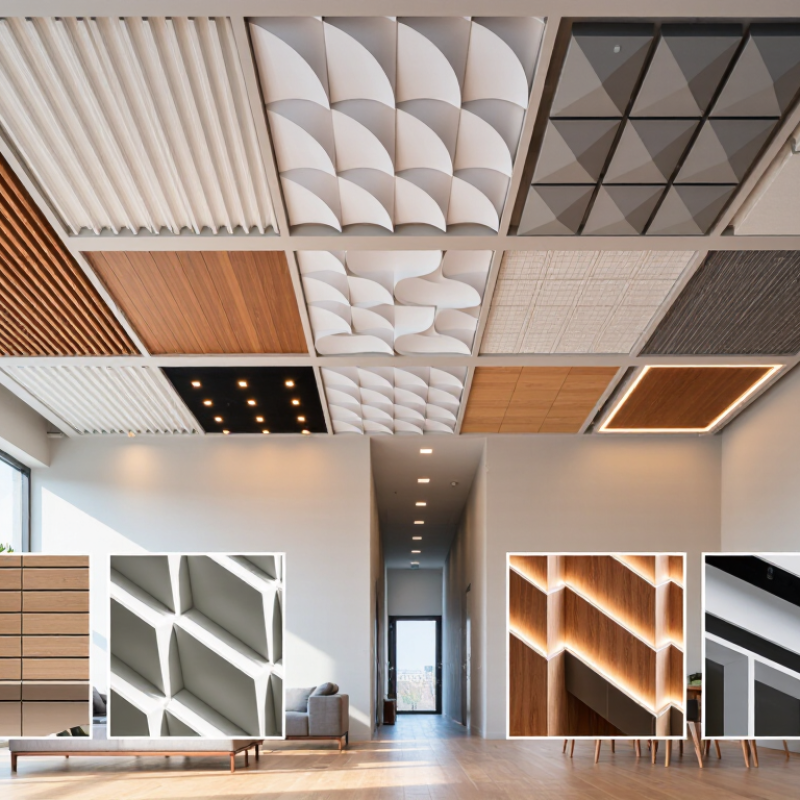
Choosing among the ten best 3D ceiling panels starts with material, not visual drama. Gypsum offers crisp geometric relief and can be painted to match walls. It suits dry rooms, but it needs careful handling during installation. PVC resists humidity and wipes clean, making it practical for kitchens and bathrooms. Yet its surface may look less natural under bright downlights. Wood-fiber panels bring warmth, acoustic absorption, and a softer edge. Check their moisture rating before using them above a shower.

Texture changes how a ceiling feels. Fluted lines visually stretch narrow rooms, while hexagonal relief creates a sharper architectural rhythm. Waves soften large open areas and can reduce the hard echo often heard in minimalist spaces. Stone-like finishes add visual weight without adding masonry load, though printed patterns may repeat noticeably. White-on-white panels create subtle shadows; charcoal panels produce stronger depth but reveal dust and joint gaps faster. A sample under the room’s actual lighting is more reliable than a catalogue image. Measure twice.

Installation style also matters. Concealed clips provide a clean finish, while adhesive systems suit lighter panels and sound substrates. Leave access around wiring and sprinklers. Always confirm fire performance, indoor-air data, cleaning instructions, and load limits through technical documents. I would not choose a panel solely because it photographs well. I once underestimated shadow density in a dark hallway, and the ceiling felt lower than planned. That mistake shifted my preference toward shallower relief and warmer lighting. Good design still needs restraint.

How to Choose Panels for Different Rooms and Interior Themes

10 Best 3D Ceiling Panels for Modern Interiors

Choosing 3D ceiling panels starts with the room’s function, not the pattern. In a living room, shallow geometric panels can add movement without overwhelming furniture. Warm wood-look textures suit Scandinavian and contemporary interiors. White or pale panels reflect light and make low ceilings feel less heavy. Small rooms need restraint.

Bathrooms and kitchens require extra care. Select panels rated for humidity, temperature changes, and easy cleaning. Avoid deep grooves where grease or condensation may collect. A smooth, moisture-resistant surface is usually more practical than an elaborate design. Always check the product’s fire-performance and installation guidance before fitting it. Measure twice.

Bedrooms benefit from quiet textures and soft visual rhythm. Acoustic panels may reduce echoes, especially in apartments with hard floors. For offices, linear designs can guide the eye and support a clean, professional theme. In dramatic dining rooms, darker panels can create intimacy, but they need layered lighting. Test a sample under daylight and warm evening bulbs. I once chose a striking high-relief panel that looked elegant in a showroom, yet felt too busy at home. The lesson was simple: ceiling scale matters more than photographs suggest. Leave enough access for wiring, repairs, and ventilation, too. A beautiful ceiling becomes frustrating when maintenance is impossible.

10 Best 3D Ceiling Panels for Modern Interiors

Typical acoustic performance of popular 3D ceiling panel materials, measured by the Noise Reduction Coefficient (NRC).

Higher NRC values indicate stronger sound absorption and are generally better suited to home theaters, offices, restaurants, and open-plan spaces. Lower-NRC materials can work well in bedrooms, hallways, and decorative areas where visual impact is the main priority. Values shown are representative figures for common panel categories; actual performance varies by thickness, perforation, backing, installation method, and tested assembly.

Installation, Maintenance, and Long-Term Performance Considerations

Choosing among the 10 best 3D ceiling panels requires more than visual appeal. Installation quality controls long-term performance. Substrates must be clean, dry, and level before adhesive or mechanical fixing begins. Misaligned panels create visible shadows and uneven joints. Fit matters. In humid rooms, installers should allow expansion gaps and use moisture-resistant backing materials. Always follow the panel’s tested fire-rating and fixing requirements.

Maintenance is usually simple, but neglect becomes expensive. Dust can settle inside raised patterns, especially above kitchens, corridors, and air returns. A soft vacuum brush and a lightly damp cloth protect the surface better than harsh chemicals. The U.S. Environmental Protection Agency reports that indoor pollutant levels can be two to five times higher than outdoor levels. Therefore, regular cleaning and adequate ventilation deserve equal attention. Replace damaged sections quickly; small cracks can expose weak edges and collect moisture.

Long-term selection should consider acoustics, fire safety, cleaning access, and embodied impacts. The 2023 UNEP Global Status Report for Buildings and Construction states that buildings consume about 30% of global final energy and produce roughly 26% of energy-related emissions. Lightweight panels may reduce material demand, but disposal and replacement still matter. Ask for test data, recycled-content documentation, and expected service conditions. My practical concern is often overlooked: a beautiful ceiling can perform poorly when lighting, sprinklers, or inspection panels are added later. Design around access from the beginning.