Top Soundproof Wall Panels for Noise Reduction
Noise is no longer a minor workplace irritation. It affects sleep, concentration, privacy, and perceived comfort. The World Health Organization’s Environmental Noise Guidelines for the European Region identifies road traffic noise as a serious public-health concern. The European Environment Agency reported that more than 113 million Europeans faced harmful road-noise exposure in 2020. These figures make acoustic treatment more practical than decorative.
Soundproof Wall Panels can reduce reflected sound, reverberation, and distracting speech. However, they do not make a room completely silent. Their performance depends on thickness, density, surface coverage, installation quality, and the wall assembly behind them. A thin polyester panel may soften a sharp echo near a desk. It may not stop bass from passing through a shared apartment wall. That distinction is often missed.
Acoustical consultant Julian Treasure says, “We are losing our listening.” His warning explains why sound quality deserves careful attention, not quick purchasing decisions. Professional testing under ASTM or ISO methods offers stronger evidence than vague claims about “maximum noise reduction.” This guide compares leading Soundproof Wall Panels through absorption ratings, materials, fire performance, mounting systems, and everyday usability. Details matter, such as whether a panel leaves gaps around a power outlet or traps dust along its edge. No panel is magic. Even the best product can disappoint when installed on the wrong surface. That is an uncomfortable limitation, but it is worth admitting before spending money.

What Soundproof Wall Panels Are and How They Reduce Noise
What Soundproof Wall Panels Are and How They Reduce Noise
Soundproof wall panels are engineered layers that manage sound, not magical barriers. Most use porous fibers, mineral wool, or dense composite cores. Their surfaces catch airborne sound, while tiny air spaces convert part of its energy into heat. Perforated coverings can improve absorption across selected frequencies.
The Noise Reduction Coefficient, or NRC, is commonly measured under ASTM C423. An NRC of 0.75 means strong average absorption across tested frequencies. It does not mean the room becomes 75 percent quieter. That distinction matters. Low-frequency bass may still pass through walls, doors, and ceilings.
For practical control, panels should cover reflection points near speakers, desks, or shared walls. An air gap behind the panel can improve lower-frequency absorption. In a furnished office, this may reduce harsh reverberation and make speech clearer. The effect depends on coverage, thickness, room size, and installation quality.
The World Health Organization’s Environmental Noise Guidelines recommend keeping nighttime outdoor noise below 40 dB Lnight to protect sleep. Panels cannot guarantee that target. They mainly reduce reflections inside a room, while sealing gaps and adding mass help block transmission. Real projects often need both methods.
Results can disappoint.
Laboratory ratings do not perfectly predict lived conditions. A panel tested in a controlled chamber may perform differently beside glass, concrete, or an unsealed door. Measure the room before buying, and review frequency-specific test data rather than relying on attractive claims.
Top Soundproof Wall Panels for Noise Reduction
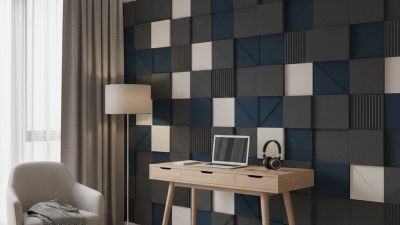
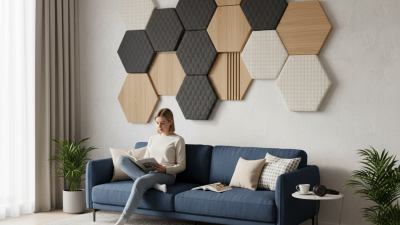
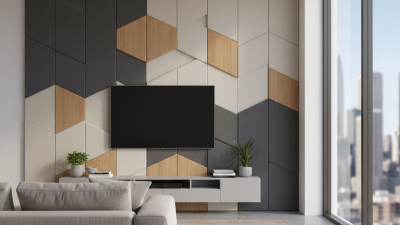
Soundproof wall panels are materials designed to absorb sound energy and reduce reflected noise inside a room. The chart compares representative sound absorption coefficients by frequency. Higher values indicate better absorption and less reverberation.
Values shown are representative laboratory-tested ranges commonly reported for comparable panel constructions under ASTM C423-style testing. Actual results vary with thickness, mounting method, air gaps, room conditions, and installation quality. Absorption panels improve room acoustics and echo control; reducing sound transmission between rooms also requires mass, airtight construction, and isolation.
Main Types of Soundproof Wall Panels and Their Key Features
Soundproof wall panels vary widely in purpose, construction, and measurable performance.
Absorptive panels reduce echoes inside a room.
They do not automatically block noise from adjacent rooms.
Fabric-wrapped fiberglass or mineral-wool panels usually provide strong mid- and high-frequency absorption. Their performance is commonly tested under ASTM C423, with NRC ratings often ranging from 0.70 to 1.00. In a meeting room, a 50-millimeter panel can soften speech reflections and reduce the sharp slap of footsteps.
Placement matters more than many buyers expect. Covering every wall can make a room feel unnaturally dull.
PET acoustic panels are lightweight, moisture-resistant, and easy to cut around outlets. They suit offices, classrooms, and rental spaces. Perforated wood panels combine visual warmth with absorption behind the surface. Their performance depends on the backing cavity, perforation pattern, and insulation layer. Without that backing, the decorative surface may absorb very little.
For actual sound isolation, high-mass systems work better.
Multiple gypsum layers, resilient channels, and sealed joints can improve wall STC performance, though panels alone rarely create a quiet partition.
The World Health Organization’s Environmental Noise Guidelines recommend below 45 dB Lnight for road-traffic exposure. NIOSH identifies 85 dBA over eight hours as a workplace exposure limit. These figures show why measurement matters.
I would check the room’s noise source, frequency, and existing wall construction before choosing materials. A higher NRC rating is useful, but it is not a guarantee of silence.
How to Choose Panels for Different Noise Problems
Top Soundproof Wall Panels for Noise Reduction
How to Choose Panels for Different Noise Problems
Choosing a wall panel begins with identifying the noise, not matching a color. A handclap that lingers suggests reverberation. Thick, porous panels can absorb these reflections, especially speech and television noise. Place them near strong reflection points, such as side walls opposite speakers. Leave a small air gap behind each panel when possible. It can improve absorption at lower frequencies.
Traffic rumble, machinery, and bass create different challenges. Lightweight decorative panels rarely block them effectively. You may need added wall mass, sealed joints, resilient channels, or a professionally designed decoupled assembly. For footsteps and shared-wall vibration, wall panels alone may disappoint. Noise can travel through floors, ceilings, pipes, and electrical outlets. Check these paths before buying several panels.
Look for tested absorption data, such as NRC, but do not confuse absorption with sound isolation. Ask for fire-performance information and clear installation guidance. Measure the room before and after treatment, using the same position and noise source. A phone app can show trends, but it is not a certified test. One common mistake is treating the wall while ignoring the door gap. That small opening may remain the loudest path. Start with one treatment area, listen carefully, and change the plan when the evidence disagrees.
Maintenance, Performance Limits, and Safety Considerations
Top Soundproof Wall Panels for Noise Reduction
Maintenance, Performance Limits, and Safety Considerations
Wall panels reduce reflected sound, but they rarely stop noise passing through a wall. A panel can look substantial and still disappoint. The World Health Organization recommends less than 40 dB Lnight indoors for healthy sleep, yet decorative panels cannot guarantee that result. Their value depends on thickness, coverage, air gaps, and the existing wall assembly. Check laboratory results under ISO 354 or ASTM C423, especially the noise reduction coefficient. These figures describe absorption, not full sound blocking.
Maintenance begins with inspection. Dust can collect in porous surfaces, reducing airflow through the material. Vacuum gently with a soft brush every few months. Replace panels with crushed edges, sagging cores, or exposed fibers. Moisture deserves attention. A damp panel may develop odors, stains, or hidden microbial growth. My own weak assumption would be trusting appearance; a clean surface does not prove a healthy core. Keep panels away from leaking pipes and poorly sealed windows.
Performance also has limits at low frequencies. Bass often travels through floors, ceilings, doors, and structural joints. NIOSH uses 85 dBA over eight hours as a recommended occupational exposure limit, so panels should not replace hearing protection or engineering controls. Select products with documented fire testing, such as ASTM E84 or an equivalent local standard. Do not cover sprinklers, alarms, vents, or electrical access. Installation gaps matter. A small perimeter opening can undermine an otherwise careful treatment.