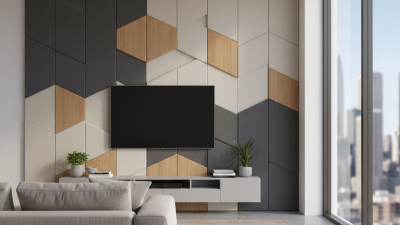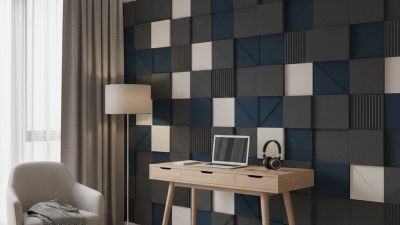
Choosing Soundproof Wall Panels is not simply a matter of selecting the thickest or most attractive product. A quiet office, bedroom, studio, or restaurant needs a clear diagnosis first. Is the problem speech, traffic, machinery, echo, or impact noise? Each source travels differently through walls, ceilings, doors, and gaps.
Professional standards provide useful guidance. ASTM C423 measures sound absorption through the Noise Reduction Coefficient, or NRC. ASTM E90 and ASTM E413 evaluate airborne sound insulation and Sound Transmission Class, or STC. These measurements are not interchangeable. A panel with a high NRC can reduce harsh reflections inside a room, but it may not stop loud neighbors. That distinction matters.
The World Health Organization’s Environmental Noise Guidelines for the European Region recommends limiting bedroom night noise below 40 dB Lnight to protect sleep. Real rooms often perform worse because of flanking paths, thin doors, and unsealed electrical outlets. Small gaps matter. This is where product claims require careful review. Look for tested results, installation details, fire-performance documentation, and maintenance guidance. The WELL Building Standard also treats acoustic comfort as part of healthier interior design, rather than a decorative extra.
Start with the room’s measured noise level and intended use. Then compare panel thickness, density, mounting method, NRC, and available STC evidence. Fabric, wood, and recycled PET surfaces may suit different visual and sustainability goals. A useful admission: no panel fixes every acoustic problem. Sometimes the best solution combines absorption, added wall mass, airtight sealing, and professional testing.
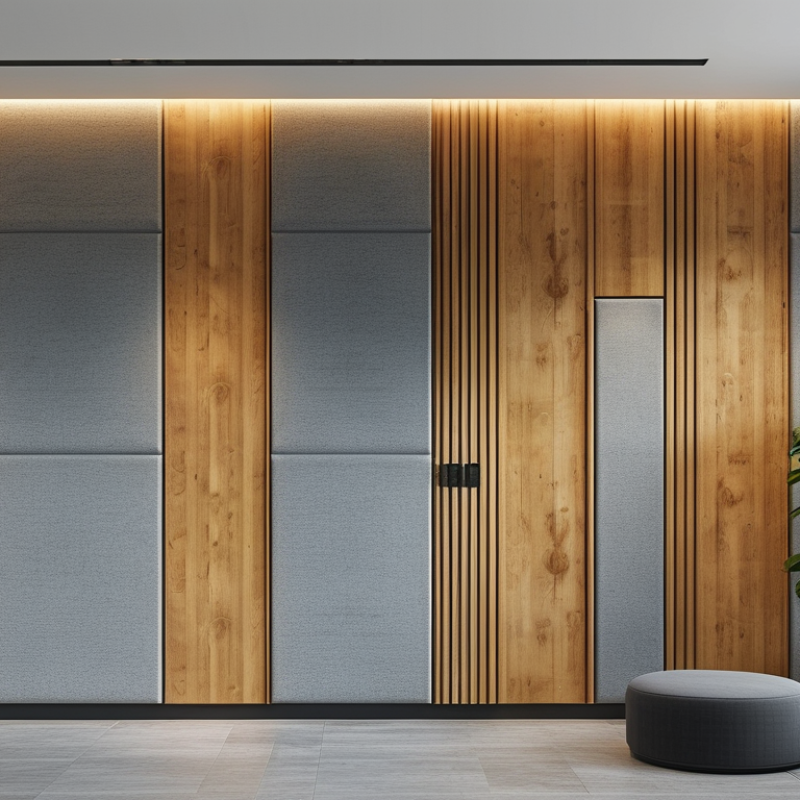
When choosing soundproof wall panels, begin with a room diagnosis, not a product catalog. Soundproofing limits sound transmission through walls. Acoustic control manages reflections inside the room. These goals overlap, but they are not identical. A conference room may need lower reverberation for clear speech. A bedroom beside traffic may need stronger isolation. Measure the source, receiver, and sound path. The World Health Organization recommends indoor bedroom noise below 30 dB(A) at night for good sleep. That target is demanding. Wall panels alone may not achieve it.
For acoustic control, record reverberation time, speech clarity, and occupancy. ISO 3382-2 provides methods for measuring reverberation time in ordinary rooms. A hard, nearly empty room can sound harsh, even with good exterior isolation. Fabric-wrapped absorbers, ceiling treatment, and soft furniture can reduce flutter echoes. For transmission problems, inspect doors, glazing, outlets, junctions, and shared ceilings. The U.S. General Services Administration explains that sound isolation depends on complete construction, not one surface treatment. I have seen attractive panels installed correctly, yet the room remained noisy. The diagnosis was incomplete.
Tips: Write a brief before shopping. Note room use, wall construction, noise source, listening position, and acceptable noise level. Ask for tested absorption data, such as NRC. Do not confuse NRC with STC. NRC describes absorption, while STC relates to airborne sound transmission. Check laboratory conditions carefully. Real rooms are messier. Measure twice.
| Room Need | Recommended Panel Type | Typical Thickness | Typical NRC Range* | Best Frequency Focus | Suitable Applications | Key Selection Notes |
|---|---|---|---|---|---|---|
| Reduce speech and general room echo | Fabric-wrapped mineral wool or fiberglass panel | 25–50 mm | 0.70–1.00 | Mid and high frequencies | Meeting rooms, classrooms, offices, restaurants | Choose thicker panels or an air gap when stronger absorption is required. |
| Improve speech intelligibility | High-density fabric or PET acoustic panel | 12–24 mm | 0.30–0.80 | Speech frequencies, approximately 500–2,000 Hz | Open-plan offices, reception areas, learning spaces | Use sufficient coverage; thin decorative panels alone may not control low-frequency reverberation. |
| Control music, vocals, and recording reflections | Broadband porous absorber with fabric finish | 50–100 mm | 0.80–1.10 | Mid and high frequencies, with improved low-mid control at greater thickness | Music rooms, podcast studios, rehearsal rooms | Combine wall panels with ceiling treatment and bass traps for more balanced acoustic control. |
| Preserve a lively interior while reducing flutter echo | Perforated wood or micro-perforated panel with acoustic backing | 16–40 mm | 0.50–0.85 | Mid and high frequencies | Auditoriums, restaurants, boardrooms, hospitality interiors | The perforation pattern, backing material, cavity depth, and open area affect performance. |
| Reduce high-frequency harshness and reflections | Open-cell acoustic foam panel | 25–75 mm | 0.50–1.05 | High frequencies | Small studios, control rooms, equipment rooms | Do not rely on foam alone for bass control or airborne sound isolation. |
| Address low-frequency buildup | Thick broadband absorber or dedicated bass trap | 100–300 mm | Varies by design and test frequency | Low and low-mid frequencies | Home theaters, recording rooms, music practice spaces | Prioritize thickness, corner placement, and measured room response over appearance alone. |
| Limit sound transfer through a partition | Acoustic isolation wall system with sealed layers and cavity insulation | System-dependent | NRC is not the primary rating | Broad frequency range | Bedrooms beside living areas, offices beside meeting rooms | Evaluate tested STC or Rw, wall mass, decoupling, airtightness, doors, glazing, and flanking paths. |
| Improve durability and cleanability in high-traffic areas | Impact-resistant fabric, PET, or perforated-panel system | 12–50 mm | 0.30–0.90 | Primarily mid and high frequencies | Corridors, schools, public buildings, multipurpose rooms | Check fire classification, impact resistance, cleanability, edge protection, and maintenance requirements. |
How to Choose Soundproof Wall Panels for Your Space?
Assess Wall Structure, Noise Sources, and Available Installation Space
Start by inspecting the wall before comparing panel sizes or finishes. A solid masonry wall behaves differently from a hollow stud wall. Tap the surface and listen for a sharp or dull response. Check for cracks, gaps around outlets, and loose trim. These weak points can carry more sound than the wall itself. In my experience, sealing these paths often improves results before adding panels. It is easy to overlook them.
Identify the noise source and its movement through the room. Speech and television usually travel through air. Footsteps, machinery, and heavy bass can vibrate through walls, floors, and ceilings. Track when the noise appears and which surface feels active. A simple phone recording can reveal patterns, but it cannot measure every frequency accurately. That limitation matters. Panels designed mainly to absorb echoes may not block deep structural vibration.
Measure the usable installation area carefully. Record wall width, ceiling height, door clearance, socket positions, and furniture depth. Thick panels can reduce walking space or interfere with shelving. Thin panels may fit better, yet provide less absorption. Leave access around switches and ventilation points. For rented rooms, consider removable mounting methods and check surface damage risks. I once planned around visible wall space and missed a radiator behind a cabinet. Rechecking the room from several angles prevents similar mistakes.
Assess wall structure, noise sources, and available installation space before selecting a panel system.
Representative indoor sound levels shown in dBA. Actual levels vary with distance, room size, construction, and operating conditions.
Masonry and concrete walls generally provide more mass. Lightweight stud walls may need added mass, airtight layers, and cavity insulation.
Acoustic panels mainly reduce reverberation and reflections inside a room. Airborne noise may require a complete wall upgrade, while impact noise often needs structural treatment.
Use slim absorbers where wall space is limited. A deeper air gap behind an absorber can improve low-frequency performance, but requires more installation room.
Choosing soundproof wall panels starts with identifying the noise problem. Absorption panels reduce echoes inside a room, while true sound isolation requires a complete wall assembly. This distinction matters. A panel alone rarely blocks loud voices, traffic, or machinery.
Compare materials carefully. Fabric-wrapped fiberglass or mineral wool usually provides strong mid- and high-frequency absorption. PET felt is lightweight, durable, and available in many shapes. Wood slat panels can add warmth, but their performance depends heavily on the acoustic backing behind them. Foam may reduce reflections, yet it often performs poorly against low-frequency noise. Look for tested NRC values when controlling echoes. For sound isolation, review STC results for the entire wall system, not only the panel. Ratings can be misunderstood.
Design affects performance and maintenance. Large, spaced panels generally absorb more sound than small decorative pieces. Covering reflection points near desks, meeting tables, or speakers can improve clarity quickly. In a home office, a mix of wall coverage and a thick rug may feel more balanced. In my experience, placing panels too high leaves voices bouncing below them. That mistake is easy to miss.
Tips: Measure the room before buying. Clap near hard surfaces and listen for ringing. Request laboratory test data, installation details, and fire-safety information. Leave small gaps only when the design allows them. I would not trust impressive numbers without test conditions. Budget for proper mounting, because installation can change real-world results.
Panel size should match the noise pattern, not only the wall width. Large panels reduce installation gaps and create a more continuous absorbing surface. Smaller panels work well around windows, doors, and irregular walls. For speech-heavy rooms, cover the wall behind the speaker and the opposite reflection zone first. In practice, this often controls echo more effectively than covering one decorative strip.
Thickness affects low-frequency performance. A 25–50 mm panel can absorb mid and high frequencies, while thicker panels or a 50–100 mm air gap generally improve lower-frequency absorption.
ASTM C423 test reports use the Noise Reduction Coefficient, or NRC, calculated from four frequency bands. An NRC near 0.80 indicates strong average absorption, but it does not describe every bass frequency. That detail is easy to miss.
Coverage should be measured in square metres, not panel count. Many acoustic assessments begin with 20–40% wall coverage, then adjust after listening or measuring reverberation. ISO 354 laboratory data can compare absorption, while ISO 11654 provides a single-number rating. Place panels at first-reflection points, usually beside the listener and on the ceiling above the listening area. Leave some exposed wall for balance. Too much absorption can make speech sound unnaturally dry, and room furniture may change the result. Test before ordering a full set.
Choosing soundproof wall panels starts with the room’s real acoustic problem. Absorption panels reduce echo, while blocking panels limit sound transfer through walls. Measure noise levels and reverberation before ordering materials. The World Health Organization recommends less than 30 dB(A) in bedrooms at night. This target shows why panel selection needs more than visual appeal. Use test results based on ISO 354 or ASTM C423, and compare the reported noise reduction coefficient carefully.
Plan installation around safety and future access. Check the wall structure, electrical routes, ventilation, sprinklers, and local fire-performance requirements. NIOSH identifies 85 dBA over eight hours as a recommended occupational exposure limit. Panels cannot replace hearing protection or proper workplace controls. Use suitable anchors, keep exits clear, and avoid sealing damp walls. Leave service gaps where cables or inspection points may need attention. A practical mistake is covering every hard surface. The room may become dull, uneven, or uncomfortable.
Maintenance should be simple. Choose removable fabric faces, vacuum them gently, and inspect edges each season. Look for sagging, moisture marks, loose fixings, or damaged backing. Keep a layout record with panel sizes and mounting points. Modular sections make later changes easier. Furniture, machinery, and room use may change. I would also reserve spare material, although storage space is often overlooked. Acoustic performance can decline when panels collect dust or become compressed. Small adjustments matter. Recheck the room after installation instead of trusting the catalog alone.