request to quote
Leave Your Message

China Top 10 3D Decorative Wall Panels Manufacturers

China’s 3D Decorative Wall Panels industry is moving from visual novelty toward practical interior solutions. Designers now examine texture, acoustic performance, installation speed, fire behavior, and material traceability. The most attractive surface may still fail if it warps beside a sunny window.

Grand View Research reports that the global decorative wall panels market is expanding steadily, supported by commercial renovation, residential remodeling, and hospitality projects. Its market analysis identifies appearance, lightweight construction, and installation efficiency as important demand drivers. Fortune Business Insights also links broader wall-panel growth with urban development and interior customization. These reports provide useful direction, but their categories do not always separate 3d Decorative Wall Panels clearly. That limitation deserves attention.

Architect Frank Lloyd Wright’s principle remains relevant: “Form and function should be one, joined in a spiritual union.” For wall panels, this means a deep geometric pattern should support the room, not overpower it. A hotel corridor may need impact resistance and easy cleaning. A home office may benefit more from softer relief and sound absorption.

This guide examines China’s top 10 3D Decorative Wall Panels manufacturers through product range, manufacturing experience, surface consistency, customization capability, certifications, and export service. Factory visits, sample comparison, and technical documentation matter more than polished catalog images. Small details reveal quality: clean corner joints, stable color under warm lighting, and panels that remain flat after installation.

The ranking is not absolute. Supplier strengths vary by project, budget, and compliance needs. Buyers should verify current data directly before making a final decision.
China Top 10 3D Decorative Wall Panels Manufacturers

Definition and Role of 3D Decorative Wall Panels in Modern Interiors

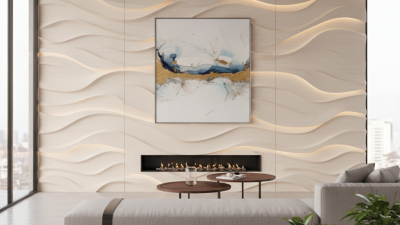
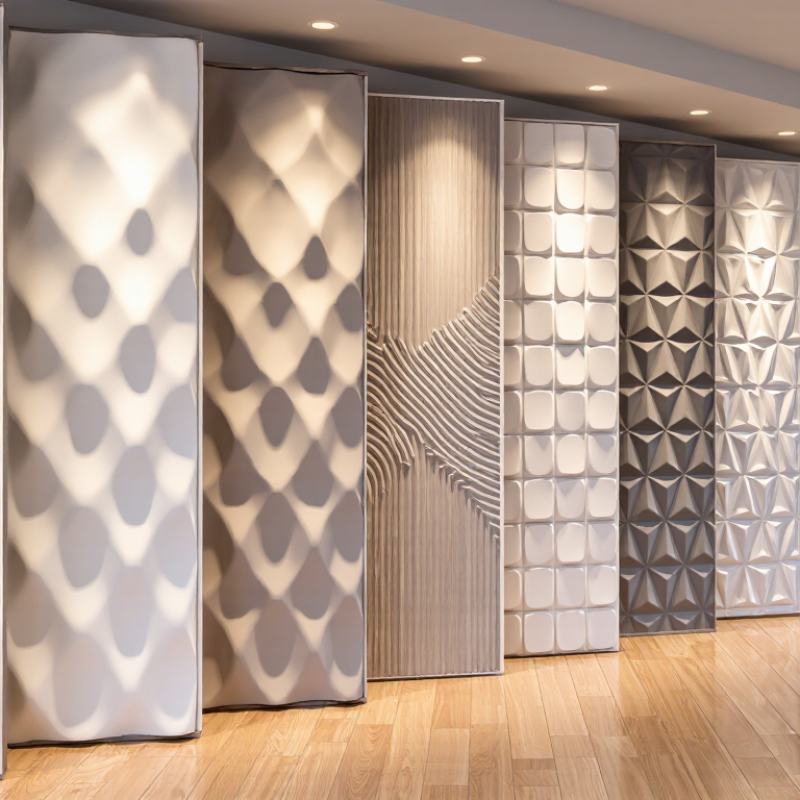
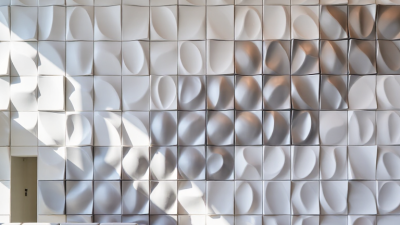
3D decorative wall panels are shaped interior surfaces that add depth, rhythm, and tactile interest to otherwise flat walls. Their raised patterns can imitate waves, fluting, stone, timber, or geometric forms. In modern interiors, they work as visual anchors behind reception desks, beds, dining areas, and media walls.

Their role is not purely decorative. Carefully selected panels can soften echo, conceal uneven substrates, and guide attention through a room. However, acoustic performance depends on the panel structure, backing, gaps, and installation method. A textured surface alone does not guarantee sound control. Moisture resistance, fire classification, cleaning requirements, and indoor air quality also deserve close review before specification.

From practical installation experience, accurate wall measurement prevents visible alignment errors. Small shadows can make a pattern appear uneven. Lighting matters too; low-angle illumination may exaggerate joints, dust, or surface defects. Panels should match the room’s scale, because an oversized pattern can make a compact space feel restless. The most reliable manufacturers provide technical sheets, material details, installation guidance, and test documentation. Still, documents cannot replace a physical sample. Color and texture often change under warm lighting. A sample may also reveal a problem that drawings hide.
Key Materials and Manufacturing Methods Used by Chinese Wall Panel Makers

China Top 10 3D Decorative Wall Panels Manufacturers

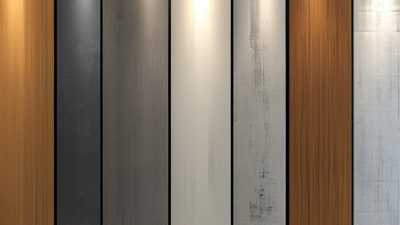
Chinese wall panel makers commonly use PVC, bamboo fiber, wood-plastic composites, MDF, and polyurethane. Each material suits different interior conditions. PVC resists moisture and cleans easily, while bamboo fiber offers a warmer, more rigid surface. MDF supports precise carving but needs careful moisture protection. Polyurethane creates deep relief with lower weight. No material is perfect.

Manufacturing usually begins with extrusion, hot pressing, or molded forming. CNC routing can sharpen geometric patterns and edge details. Embossing rollers produce repeated textures, such as stone lines or wood grain.

Makers may add laminated films, UV coatings, or water-based finishes. Quality teams should check panel density, flatness, color consistency, and dimensional stability.

They should also request formaldehyde, fire-performance, and VOC test reports from independent laboratories. A beautiful sample can still hide weak bonding or uneven backing.

Tips: Ask for a cut sample, not only a showroom piece. Check the rear surface for warping, voids, and poor adhesion. Rub the finish gently with a clean cloth. Confirm installation tolerances before ordering. Small mistakes become visible under strong lighting. It is also wise to test one panel in the actual room, because humidity, wall movement, and artificial light can change the final appearance.

Selection Criteria for China’s Top 10 3D Decorative Wall Panel Manufacturers

Selecting China’s top 10 3D decorative wall panel manufacturers requires more than comparing catalog images. A reliable evaluation starts with production experience, material knowledge, and transparent factory records. Buyers should check how long the manufacturer has produced wall panels and which markets it serves. Factory visits can reveal useful details, such as clean cutting areas, organized storage, and stable packaging methods.

Material performance deserves close attention. Review panel density, dimensional stability, surface bonding, and moisture resistance. Ask for independent test reports covering fire behavior, formaldehyde emissions, and sound absorption where relevant. Sample panels should be inspected under strong light. Uneven textures, weak edges, or color differences may appear after installation. Technical data should match the actual sample, not only a sales document.

Quality control must continue beyond the first order. Strong manufacturers use batch inspections, production records, and clear replacement procedures. Check whether staff can explain installation tolerances, cleaning limits, and indoor application conditions. Export experience also matters because packaging must survive long transportation and changing humidity. No factory is perfect. I have found that honest suppliers admit limitations and propose workable adjustments. That response often indicates greater reliability than polished promises. Pricing should be compared with service, consistency, testing, and delivery risk. A low quotation can hide costly rework.

China Top 10 3D Decorative Wall Panels Manufacturers - Selection Criteria for China’s Top 10 3D Decorative Wall Panel Manufacturers

No. Evaluation Dimension Selection Criteria Verifiable Data or Benchmark Suggested Weight Recommended Evidence
1 Product Material and Composition Assess whether the panel material is clearly identified and suitable for the intended interior application. Material type, density, thickness, surface finish, formaldehyde or VOC information, and technical datasheet. 12% Material declaration, test report, safety data sheet, and production specification.
2 Dimensional Accuracy Evaluate dimensional consistency between production batches and the accuracy of the 3D relief pattern. Documented tolerances for length, width, thickness, squareness, flatness, and embossed depth. 10% Inspection plan, calibrated measuring records, approved samples, and batch inspection reports.
3 Surface Finish and Pattern Quality Check color uniformity, edge quality, texture definition, coating adhesion, and resistance to visible defects. Approved color standard, defect classification, gloss or texture specification, and visual inspection limit. 10% Golden sample, color card, coating test results, and pre-shipment inspection photographs.
4 Fire Performance Confirm that the panel’s fire classification matches the building code and project requirements of the destination market. Applicable classification under EN 13501-1, ASTM E84, or another recognized local fire-testing method. 15% Laboratory test report identifying the exact panel construction, thickness, facing, and substrate.
5 Indoor Air Quality Review emissions of formaldehyde, VOCs, odors, and other substances relevant to indoor installation. Testing performed against the requirements of the destination country or recognized indoor-air-quality standard. 10% Current emissions report, laboratory accreditation details, and product composition statement.
6 Moisture and Durability Assess dimensional stability, water resistance, scratch resistance, impact resistance, and suitability for the proposed room conditions. Water absorption or humidity-cycle data, coating adhesion, abrasion results, and stated service conditions. 10% Product test reports, installation limitations, maintenance instructions, and warranty terms.
7 Manufacturing Capacity Determine whether the supplier can maintain stable output, consistent quality, and delivery continuity for the required volume. Monthly capacity, production lead time, number of operating lines, defect rate, and on-time delivery history. 10% Factory audit, capacity statement, production plan, quality records, and shipment history.
8 Customization Capability Evaluate the ability to produce custom patterns, dimensions, colors, finishes, packaging, and project-specific samples. Minimum order quantity, tooling or mold charge, sample lead time, color matching process, and design approval procedure. 8% Customization catalogue, sample records, tooling quotation, and signed pre-production approval.
9 Quality Management and Traceability Verify that incoming materials, production stages, final inspection, complaints, and corrective actions are controlled. Documented quality system, batch coding, inspection records, corrective-action process, and calibration control. 8% Quality manual, process flow chart, internal audit records, and traceability samples.
10 Export Service and Total Cost Compare product price with packaging, logistics, documentation, technical support, after-sales response, and project risk. Quotation validity, trade terms, packaging dimensions, container loading plan, payment terms, and response time. 7% Formal quotation, packing list, export references, warranty policy, and service-level commitments.
Total Suggested Evaluation Weight 100% Use the same scoring scale for every shortlisted manufacturer.
Scoring method: Assign each criterion a score from 1 to 5, multiply the score by the suggested weight, and rank suppliers by the resulting weighted total. Fire performance, indoor air quality, and product-specific test evidence should be treated as mandatory compliance checks rather than price-only comparison factors.

Profiles of Ten Leading Chinese 3D Wall Panel Manufacturers

China Top 10 3D Decorative Wall Panels Manufacturers

Manufacturer One specializes in lightweight PVC panels for hotels and retail interiors.

Manufacturer Two develops bamboo-fiber boards with warm textures and low-maintenance surfaces.

Manufacturer Three focuses on acoustic panels, using layered structures to reduce echo in offices and restaurants.

Manufacturer Four supplies fire-rated decorative boards for commercial projects, supported by documented testing.

Manufacturer Five produces polyurethane panels with deep stone and wood patterns. They are easy to cut.

Manufacturer Six serves residential projects with moisture-resistant panels for bedrooms, corridors, and feature walls.

Manufacturer Seven combines digital surface printing with embossed textures, offering detailed visual effects.

Manufacturer Eight emphasizes custom molds, helping designers match unusual dimensions or repeated geometric forms.

Manufacturer Nine focuses on recyclable materials and tighter packaging, which can reduce transport damage.

Manufacturer Ten provides large-volume production and export documentation for contractors and distributors.

Practical evaluation matters more than attractive samples.

Buyers should check panel density, joint accuracy, color consistency, and installation guidance. Factory visits or independent inspections can reveal storage conditions and quality controls. Certifications should be verified against the actual product, not only a company brochure.

Some manufacturers may promise fast customization, yet complex molds can extend delivery times. That detail is easy to overlook.

My assessment would also include a small installation trial, because impressive panels can still show weak edges, visible seams, or uneven lighting after fitting.

Applications, Customization Options, and Quality Standards for 3D Wall Panels

China Top 10 3D Decorative Wall Panels Manufacturers

China’s leading 3D wall panel manufacturers serve hotels, retail stores, offices, cinemas, and residential interiors. A 2024 Grand View Research report estimates the global decorative wall panels market will expand steadily through 2030, driven by renovation and lightweight interior materials. These suppliers typically offer PVC, MDF, gypsum, bamboo fiber, and recycled polymer panels. Each material suits different conditions. Moisture matters.

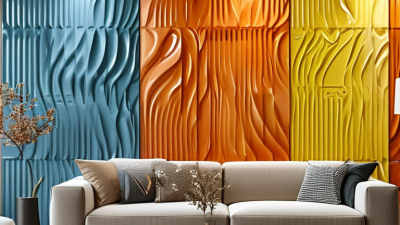
Customization usually covers depth, texture, color, panel size, edge design, and surface coating. Some factories produce stone, fluted wood, wave, and geometric textures from customer drawings. CNC molds and digital color matching improve repeatability. However, a glossy sample can mislead. Samples can deceive. Buyers should inspect full-size panels under warm and cool lighting. They should also request installation trials, not only product photographs.

Quality evaluation should include thickness tolerance, density, impact resistance, fire performance, moisture absorption, and formaldehyde emissions. ASTM E84 and EN 13501-1 may support fire classification, while ISO 9001 systems can improve production consistency. A 2023 report from MarketsandMarkets identifies sustainability and low-emission materials as important construction purchasing factors. Reliable factories provide batch records, test reports, and traceable raw materials. Third-party testing remains valuable, especially for public projects. Some specifications still need clearer verification. That gap deserves attention.

China 3D Decorative Wall Panels: Applications, Customization and Quality Benchmarks

Indicative procurement priorities for non-branded 3D wall panel projects. Percentages represent a planning benchmark rather than company or market-share data.

Residential interiors are the largest application area, followed by hospitality and retail projects. Common customization requirements include surface texture, panel dimensions, colors, coatings and moisture resistance. Quality reviews typically consider dimensional consistency, surface finish, formaldehyde emissions, fire performance and installation stability. For example, EN 717-1 E1 classification uses a formaldehyde emission limit of 0.124 mg/m³, while ASTM E84 Class A uses a flame-spread index of 0–25.