How to Choose Soundproof Wall Panels for Any Space?
Choosing Soundproof Wall Panels starts with a clear question: what noise must the room control? Voices, traffic, machinery, and echo require different solutions. The European Environment Agency’s Environmental Noise in Europe 2022 briefing estimated that over 100 million Europeans face harmful long-term road-traffic noise exposure. Inside buildings, sound can feel equally intrusive. A phone call may blur across a glass meeting room. Footsteps may linger beneath a hard ceiling.
The terminology needs care. Many products called Soundproof Wall Panels mainly absorb reflected sound. They reduce reverberation, but they may not stop sound passing through a thin wall. The World Health Organization’s Environmental Noise Guidelines for the European Region links excessive noise with sleep disturbance, annoyance, and other health concerns. That evidence makes responsible specification important. A decorative panel alone is not a complete barrier.
Performance data matters more than showroom appearance. ASTM C423 measures sound absorption, while ISO 354 evaluates absorption in a reverberation room. These standards can help compare products, though test results may not match a furnished office or home. Look for tested absorption coefficients, NRC values, fire classification, thickness, mounting method, and cleaning requirements. Also inspect the wall itself. Gaps, doors, ducts, and lightweight partitions often weaken the entire assembly.
Small details matter.
This guide explains how to match Soundproof Wall Panels with bedrooms, offices, studios, restaurants, and shared spaces. It also questions common assumptions. More panels do not always mean better comfort. A highly treated room can sound unnaturally dry. The practical goal is controlled sound, verified performance, and a safer, more usable space.
Define the Soundproofing Problem and Identify the Space’s Needs
Before choosing soundproof wall panels, define the actual noise problem. A speech-heavy office needs better clarity, while a home theater may require stronger sound isolation. These are different goals. Sound absorption reduces echoes inside a room. Sound blocking limits noise passing through walls. Many products help with the first problem, but not the second.
Walk through the space at different times. Note where noise enters, where it reflects, and when it becomes distracting. A thin wall beside a busy road may need added mass, sealed gaps, and careful installation. A large meeting room with hard floors may mainly need absorptive panels. Listen near corners, ceilings, doors, and shared walls. Small gaps matter more than expected.
Room use should guide panel placement. In a recording space, uneven reflection can affect microphones and voices. In a classroom, panels should reduce reverberation without making speech dull. Moisture, cleaning routines, fire performance, and impact resistance also deserve attention. I once focused too much on panel thickness and overlooked an unsealed door. The result was disappointing. Measurements or professional acoustic advice can prevent that mistake. Treat product ratings as useful evidence, not a complete promise. Every room behaves differently.
Understand How Wall Panels Control Sound and Reduce Noise
How to Choose Soundproof Wall Panels for Any Space?
Understand How Wall Panels Control Sound and Reduce Noise
Wall panels manage sound by absorbing part of its energy. They reduce reflections, echoes, and harsh room noise. In a bare office, voices may bounce between glass, concrete, and plaster. Absorptive panels soften those reflections, making speech easier to understand. They do not completely block sound from passing through walls. That requires mass, airtight construction, and professional isolation methods.
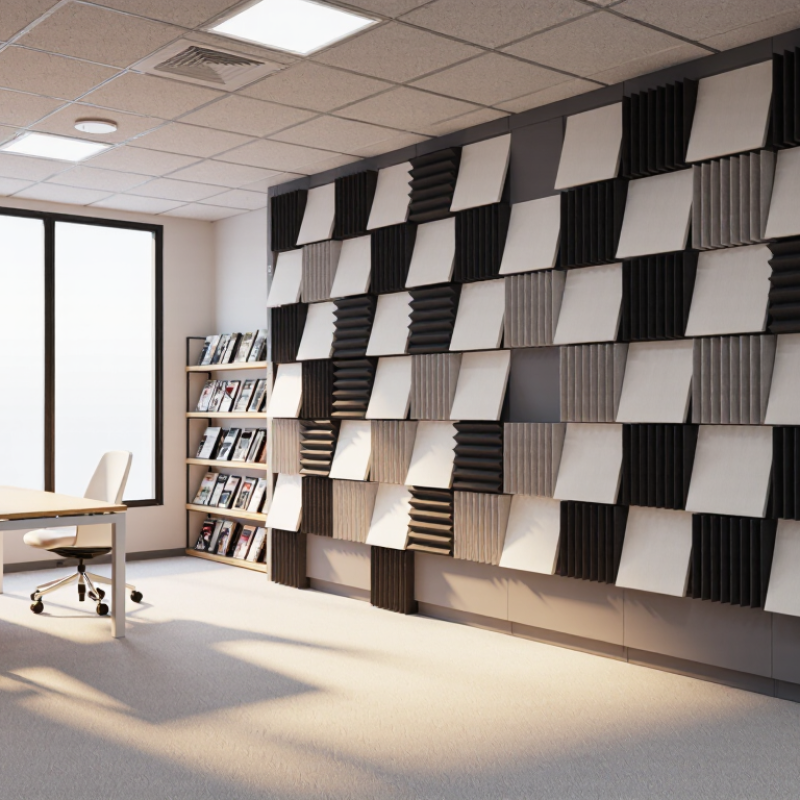
When choosing panels, examine their thickness, density, surface structure, and tested absorption performance. Thicker panels usually absorb more low-frequency energy, although placement still matters. Place panels near strong reflection points, such as side walls beside a conference table. Ceiling panels can help in rooms with hard floors and exposed surfaces. Leave small air gaps behind some panels when appropriate. This can improve absorption across certain frequencies.
Room use should guide the decision. A recording room needs balanced control, while a classroom needs clear speech. A busy restaurant may need durable panels that tolerate frequent cleaning. Check installation instructions and fire-safety documentation before purchasing. Measurements are valuable, but listening in the actual room matters too. My first layout is not always correct. Furniture, windows, and occupancy can change the result. Test one section before covering every wall. A quieter room is not always a better room; controlled, natural sound is the real goal.
Compare Panel Materials, Designs, and Sound Absorption Ratings
Choosing soundproof wall panels begins with the room’s actual problem. Sound absorption reduces echo, while soundproofing limits noise passing through walls. These goals overlap, but they are not identical. In a small meeting room, polyester fiber panels can soften voices and reduce harsh reflections. Fabric-wrapped mineral wool often absorbs a wider frequency range, including lower speech tones. Wood slat panels add warmth, but their backing determines most of their acoustic performance.
Compare the absorption rating carefully. NRC values show average absorption across selected mid frequencies. A higher NRC usually means less reflected sound, not complete silence. Check the tested frequency range, thickness, air gap, and installation method. A 50-millimeter panel mounted away from the wall may perform better than a thinner panel fixed tightly against it. Ratings can mislead.
Design still matters. Use textured panels on large bare walls, and place them near speaking zones or opposite hard surfaces. Ceiling panels can control sound above desks. In my room tests, evenly spaced panels looked neat but left one corner noticeably lively. The layout needed adjustment. That mistake taught me to listen from several seats, not one.
Choose moisture-resistant materials for busy corridors and washable surfaces for classrooms. Natural wood may suit a quiet office, but it can reflect sound unless paired with an absorbent backing. Check fire documentation, mounting strength, edge quality, and independent test reports before ordering. A beautiful panel is disappointing when the room still sounds sharp.
How to Choose Soundproof Wall Panels for Any Space?
Typical Noise Reduction Coefficient (NRC) by panel material and design
NRC is a rounded rating of how effectively a material absorbs mid-frequency sound; higher values generally indicate better echo and reverberation control. Mineral wool and fiberglass panels typically provide strong absorption, while PET felt and perforated wood panels can combine acoustic performance with greater design flexibility. Actual results depend on thickness, air gaps, mounting method, room size, and frequency range.
Match Panel Placement and Coverage to the Room’s Acoustic Goals
How to Choose Soundproof Wall Panels for Any Space?
Start with the goal. A meeting room needs clear speech, while a music room may need controlled reverberation. Sound-absorbing panels reduce reflections; they do not block noise through walls. That distinction prevents expensive mistakes.
ANSI/ASA S12.60 recommends unoccupied classroom reverberation times of 0.6 seconds or less in rooms under 10,000 cubic feet. Larger classrooms can reach 0.7 seconds. These targets offer useful guidance for offices, studios, and learning spaces.
Match placement to the room’s acoustic problem. In a bright conference room, place panels on the side walls near seated listeners. Add ceiling treatment above the table to reduce flutter echoes between parallel surfaces. For a studio, treat early reflection points first, then use thicker absorbers on rear walls.
Coverage should remain balanced. Covering every surface can make speech sound unnaturally dry.
Coverage matters.
ISO 3382-2 describes reverberation-time measurement for ordinary rooms, but real spaces rarely behave like laboratories. Furniture, people, glass, and open doors change the result. Begin with panels covering roughly 20–30% of major reflective surfaces, then measure again with a calibrated sound-level meter or acoustic consultant. This is not perfect. A hand clap can reveal an echo, but it cannot replace testing. The U.S. General Services Administration also emphasizes controlling reverberation and background noise in workplace design guidance. Placement beats decoration when the acoustic target is clear.
Evaluate Installation Methods, Safety, Maintenance, and Cost
Soundproof wall panels should match the room’s real problems, not only its appearance. Absorption panels reduce echoes, while dense barrier systems help limit sound passing through walls. That difference matters.
Installation affects performance and future repair. Adhesive mounting is clean and quick, but removal may damage painted surfaces. Mechanical clips allow easier replacement and create a small air gap behind the panel. Heavy boards may require wall anchors and careful load checks.
In a rental apartment, I prefer removable hardware. In a permanent studio, layered construction usually performs better. Measure twice. I once installed panels around a doorway without checking the swing clearance. The acoustic result was acceptable, but daily use became awkward.
Safety deserves more attention than many product pages suggest. Check the panel’s fire behavior, edge treatment, and material emissions before installation. Avoid covering electrical outlets, vents, or inspection points. In humid rooms, choose moisture-resistant surfaces and leave enough ventilation behind the panels. Local building requirements may also affect placement and materials.
Maintenance is usually simple, but not effortless. Vacuum fabric gently with a soft brush, and wipe sealed surfaces with a slightly damp cloth. Do not soak porous cores. Keep spare fasteners and one matching panel for accidental damage. Compare the full cost, including tools, labor, mounting hardware, delivery, and future replacement. A cheaper panel can become expensive after repeated repairs. My own cost estimates have been too optimistic when preparation time was ignored. Expect some adjustment after the first installation.